

Flexible Packaging vs Rigid Packaging: Which One Is Better for Modern Products?
Release time: 2026-09-22
Table of Contents
Choosing the right packaging format is about more than appearance or unit price. Brands need to consider product protection, shelf life, transportation, storage, production efficiency, sustainability, and consumer convenience. This is why the choice between Flexible Packaging and rigid packaging has become an important decision for food, beverage, personal care, and consumer product manufacturers.
Neither format is suitable for every product. Flexible packaging can offer lightweight construction, material efficiency, and design flexibility, while rigid packaging provides strength, structure, and a familiar container format. The better option depends on the product, distribution conditions, filling process, and the expectations of the target market.

Flexible Packaging vs Rigid Packaging: What Is the Difference?
Flexible packaging includes pouches, sachets, bags, and roll stock made from films, laminates, aluminum foil, paper-based materials, or combinations of different layers. Unlike rigid containers, these formats can bend, fold, and adapt to the shape of their contents.
Rigid packaging includes bottles, jars, cans, trays, and hard plastic containers that maintain a fixed shape. This structure can provide excellent physical protection and stacking stability, but it may also require more material and storage space.
The right choice should start with the product rather than the packaging format itself. A dry snack, for example, may benefit from a lightweight pouch, while a product that requires high impact resistance may perform better in a rigid container.
Product Protection and Barrier Performance
Product protection is one of the most important factors when comparing flexible and rigid formats. Food, coffee, snacks, powdered products, and other sensitive goods may need protection from oxygen, moisture, light, or external contamination.
Modern Flexible Pouch Packaging can use multilayer material structures to provide different barrier properties. Depending on the product, the material combination can be designed to help control moisture and oxygen exposure while maintaining reliable sealing performance.
Rigid packaging can also provide strong protection, especially when mechanical strength is important. However, a rigid container is not automatically better at preserving every product. The packaging structure should match the product’s sensitivity, required shelf life, and storage conditions.
For manufacturers, material selection is therefore just as important as the package format. The right combination can help maintain product quality while avoiding unnecessary packaging weight or complexity.
Transportation and Storage Efficiency
Packaging also affects logistics. Weight, package volume, warehouse space, and transportation efficiency can all influence the total cost of getting a product from the factory to the customer.
Flexible formats are generally lightweight and can often be stored efficiently before filling. Finished pouches can also use transportation space effectively, which can be valuable for manufacturers handling large production volumes or long-distance shipments.
Rigid containers provide structural stability and can be convenient for stacking and handling. However, their fixed shape may require more storage and transportation space. For this reason, manufacturers should look beyond the initial packaging price and consider the complete logistics cost.
A packaging format that uses less material and weighs less may provide advantages throughout the supply chain, particularly when products are shipped at large scale.
Food Applications and Consumer Convenience
Flexible packaging is widely used for food products such as snacks, coffee, dried foods, frozen products, powdered foods, and pet food. The format can combine product protection with practical features such as resealable zippers, tear notches, and easy-open designs.
These features can improve the consumer experience while helping protect the remaining product after opening. Flexible pouches can also be produced in different sizes, making them suitable for single-serving products as well as larger retail formats.
Rigid packaging remains popular for beverages, sauces, cosmetics, and other products where a stable container is important. Bottles and jars can provide a familiar user experience and may be preferred when consumers need to pour, reuse, or repeatedly handle the container.
The best choice depends on how the product is used, stored, transported, and consumed.
Sustainable Packaging Considerations
Sustainability is another important factor, but it should not be reduced to a simple flexible-versus-rigid comparison. Material consumption, package weight, transportation requirements, product protection, recyclability, and end-of-life infrastructure all affect the environmental performance of a packaging solution.
For brands developing Sustainable Packaging, the complete lifecycle should be considered. Lightweight construction can reduce material use and transportation weight, while effective barrier properties can help protect products and reduce waste.
At the same time, manufacturers need to consider whether the selected materials can be effectively recovered or recycled in their target markets. A sustainable packaging strategy should therefore balance material efficiency, product protection, logistics, and end-of-life considerations.
Customization and Production Requirements
Flexible packaging offers considerable opportunities for customization. Manufacturers can adjust pouch dimensions, material structures, printing, closures, and functional features according to different products and market requirements.
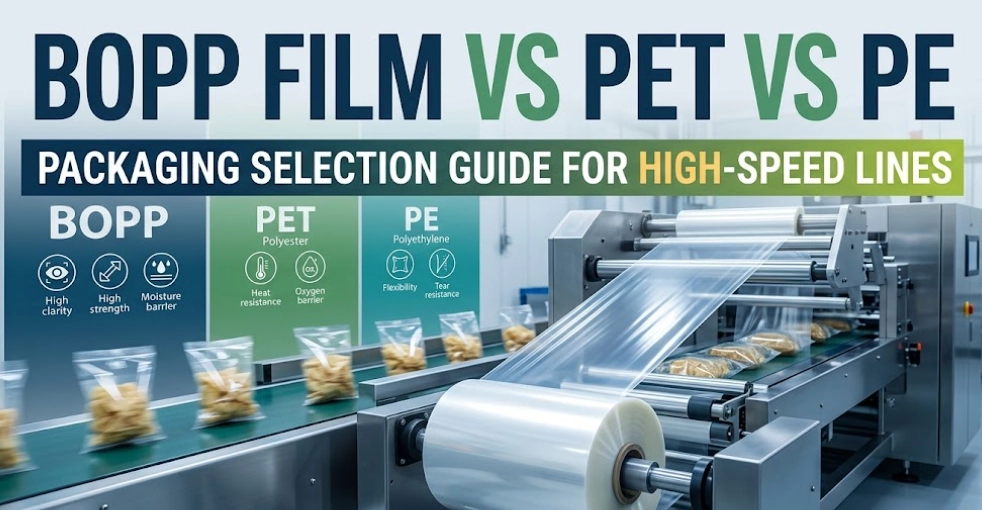
However, packaging design must also work with the production process. Filling speed, sealing temperature, film properties, pouch dimensions, and machine compatibility can all affect the final package quality.
This is particularly important for brands launching new products. A package may look attractive and provide good protection but still create production problems if it is not compatible with existing filling and sealing equipment.
Working with an experienced packaging supplier can help manufacturers select a material structure and format that balance product requirements, production efficiency, and commercial goals.
When Should You Choose Flexible Packaging?
Flexible packaging is often a strong choice when lightweight construction, efficient transportation, customizable design, reliable barrier performance, and convenient handling are important. It is particularly suitable for many food and consumer products where shelf life, package size, and logistics efficiency matter.
Rigid packaging may be more appropriate when structural strength, impact resistance, shape retention, or repeated use is essential. Some products simply require the stability of a bottle, jar, can, or hard container.
Instead of choosing based on packaging trends, manufacturers should evaluate the product’s actual requirements, including shelf life, barrier properties, filling process, transportation conditions, branding objectives, and sustainability goals.
Flexible Packaging or Rigid Packaging: Which Is Better?
There is no universal winner. Flexible packaging can provide an effective combination of lightweight construction, material efficiency, product protection, customization, and convenience. Rigid packaging remains valuable when strength, structure, and fixed-container functionality are priorities.
For modern product manufacturers, the best packaging is the one that meets the product’s technical requirements while supporting efficient production, transportation, consumer use, and long-term business goals.
Rather than asking which format is always better, brands should ask which packaging solution provides the right balance of protection, efficiency, functionality, and value for their specific product.
FAQ
Is flexible packaging better than rigid packaging?
Not in every application. Flexible packaging is often suitable for lightweight products, efficient transportation, and customizable formats, while rigid packaging can be better when structural strength and shape retention are required.
Is flexible packaging suitable for food products?
Yes. It is widely used for snacks, coffee, dried foods, frozen products, powdered foods, and pet food because material structures can be designed for specific barrier and sealing requirements.
Is flexible packaging more sustainable?
It can reduce material use and transportation weight, but sustainability depends on the complete packaging lifecycle, including material selection, product protection, recyclability, and waste management.
Can flexible packaging be customized?
Yes. Manufacturers can customize dimensions, material structures, printing, closures, and other functional features according to product and production requirements.