



BOPP Film vs PET vs. PE: Packaging Selection Guide for High-Speed Production Lines
Release time: 2026-05-29
Table of Contents
BOPP film, or biaxially oriented polypropylene film, is a high-clarity thermoplastic polymer sheet that has been mechanically stretched in both the machine and transverse directions. This dual-axis orientation rearranges the molecular structure, transforming ordinary polypropylene into a premier flexible packaging material renowned for its exceptional moisture resistance, high tensile strength, crystal-clear transparency, and excellent printability across food, labeling, and consumer goods industries.
Understanding Molecular Orientation and Physical Principles
The exceptional performance of this material stems from a precise physical transformation during manufacturing. Untreated polypropylene possesses a random, semi-crystalline molecular structure that limits its optical clarity and mechanical strength. By heating the extruded sheet to its softening point and stretching it sequentially across two perpendicular axes, the polymer chains are forced into a highly ordered, tightly packed crystalline matrix.
This mechanical alignment significantly minimizes the microscopic gaps between polymer chains. Chemically, the non-polar nature of the polypropylene molecules remains intact, but the increased density creates a formidable barrier against water vapor molecules. This structural shift dramatically upgrades the film from a hazy, brittle plastic into a highly resilient, glass-like sheet with superior dimensional stability under fluctuating temperatures.
Performance Metrics and Operational Advantages
On high-speed automated packaging lines operating at speeds exceeding 400 packages per minute, material stiffness and tensile strength are critical to preventing costly machine jams. Standard physical testing reveals that biaxially oriented sheets deliver a tensile strength of 130 to 200 MPa in the machine direction. This high modulus prevents film elongation under high tension, ensuring flawless registration during printing and cutting phases.
From a shelf-life perspective, the low water vapor transmission rate, which typically measures below 5.0 grams per square meter every 24 hours at 38 degrees Celsius and 90 percent relative humidity, protects dry goods from absorbing atmospheric moisture. Plant managers frequently report that upgrading to these specialized sheets minimizes standard deviation in seal strength, directly lowering the reject rate on vertical form-fill-seal machinery. Optical clarity is another major operational benefit, with haze percentages ranging strictly between 1.0 and 2.5 percent, ensuring maximum product visibility.
Manufacturing Realities and Industrial Application Fields
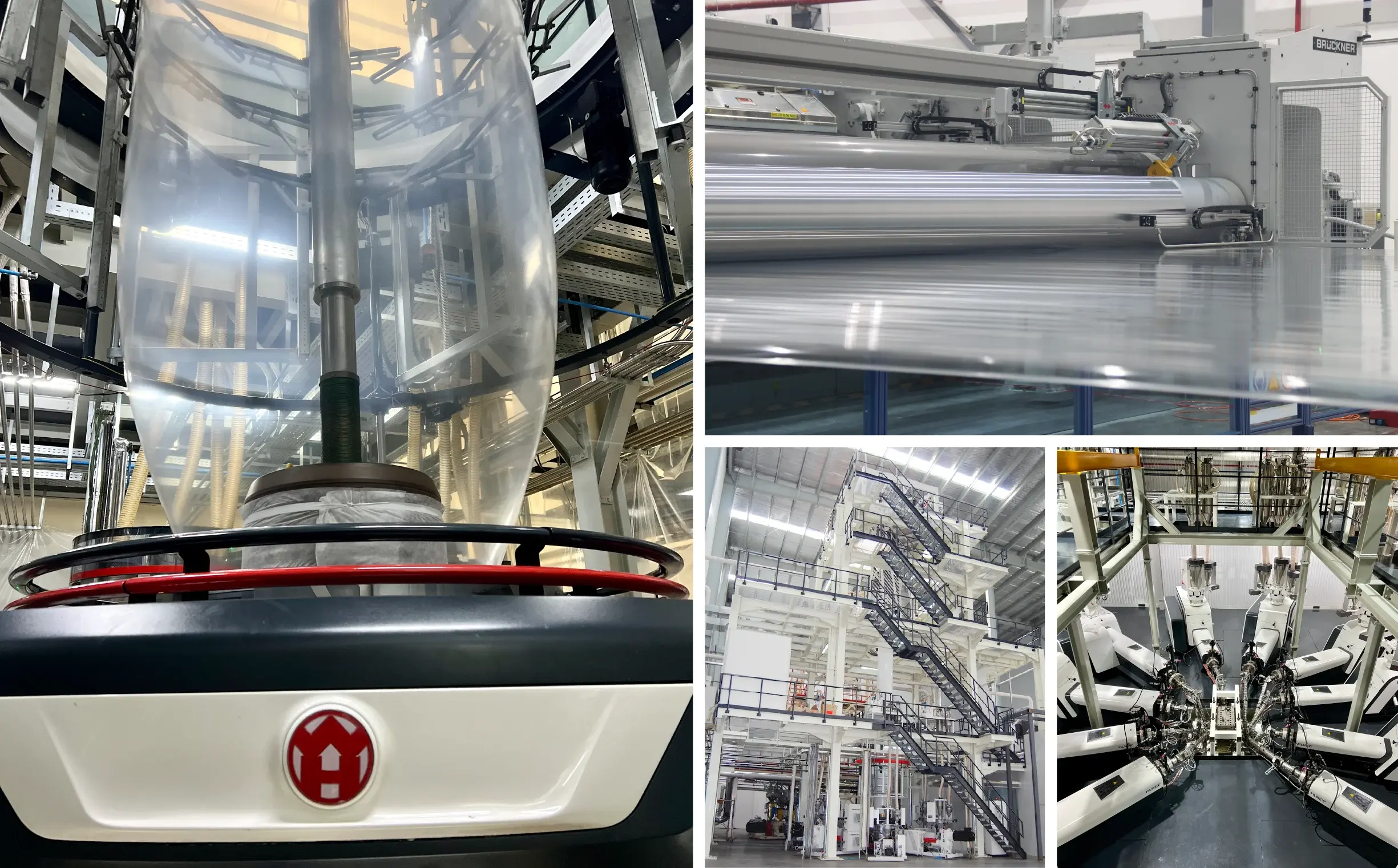
The production of these high-performance oriented polypropylene sheets primarily utilizes the tenter-frame extrusion process. Raw polypropylene resins are melted and co-extruded through a flat die onto a chilled casting roll to form a thick base sheet. This sheet is immediately reheated and passed through a series of rollers running at progressive speeds to achieve machine-direction stretching, followed by a heated tenter oven that expands the film laterally.
To optimize the material for specific industrial applications, manufacturers utilize multi-layer co-extrusion. By adding thin layers of ethylene-propylene copolymers to the core homopolymer, the film gains heat-sealable properties without sacrificing its structural stiffness. Surface treatment via corona discharge is also applied inline, raising the surface tension to 38-42 dynes per centimeter to guarantee permanent ink adhesion during subsequent printing processes.
In terms of industrial application, food packaging represents the largest consuming sector. The material is used extensively for potato chip bags, confectionery wraps, and biscuit packaging due to its geographic moisture barrier. Additionally, it serves as a leading solution for pressure-sensitive, roll-fed labels on beverage bottles and functions as a premium overwrap film for cosmetic and tobacco boxes to provide a tamper-evident seal.
Direct Material Evaluation and Substitutes
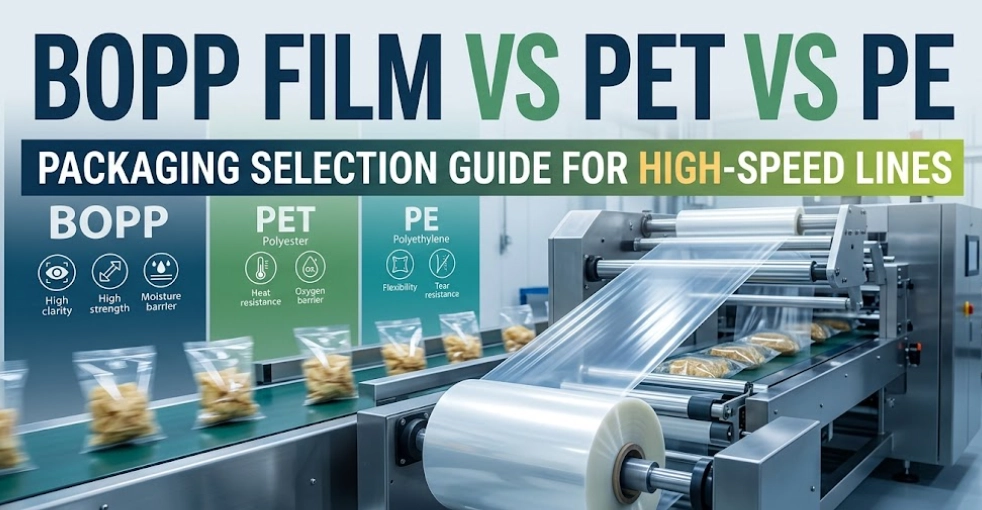
When evaluating alternative substrates like polyethylene or polyester, packaging engineers must balance mechanical properties against total manufacturing costs. Polyester film offers superior thermal stability and an exceptional oxygen barrier, but it carries a much higher processing cost and lacks the superior moisture barrier properties inherent to polypropylene. This makes polyester better suited for retort pouch applications rather than high-speed wrapping of dry goods.
Polyethylene film, on the other hand, provides excellent flexibility and high tear resistance at a lower price point, but it suffers from low clarity and poor tensile strength. Polyethylene stretches easily under tension, making it highly unsuitable for high-speed automated printing and packaging lines where precise registration is mandatory. Therefore, oriented polypropylene fills the critical mid-market gap, delivering the optimal balance of optical clarity, mechanical speed, and cost efficiency.
Frequently Asked Questions
What is the optimal micron gauge for high-speed flow-wrap packaging?
For standard confectionery and bakery applications on high-speed flow-wrappers, a thickness of 20 to 30 microns is highly recommended. This gauge provides the perfect balance of stiffness for structural feeding and optimal thermal conductivity for rapid heat sealing.
How does surface treatment affect ink adhesion on printing lines?
Raw polypropylene has low surface energy, which causes inks to bead up and peel. Corona or flame treatment modifies the surface chemistry, raising the surface tension to 38-42 dynes per centimeter, creating polar sites that allow printing inks to bond permanently.
Can these films be seamlessly recycled within existing infrastructure?
Yes, polypropylene is classified under resin identification code 5 and is fully recyclable. When used as a monomaterial solution without being laminated to incompatible polymers, it can be easily shredded, pelletized, and reprocessed into industrial components or secondary packaging materials.